
Top Products for Attic Ladder Installations to Enhance Accessibility
Discover the leading tools and accessories that simplify attic ladder setup and improve safety for all users.
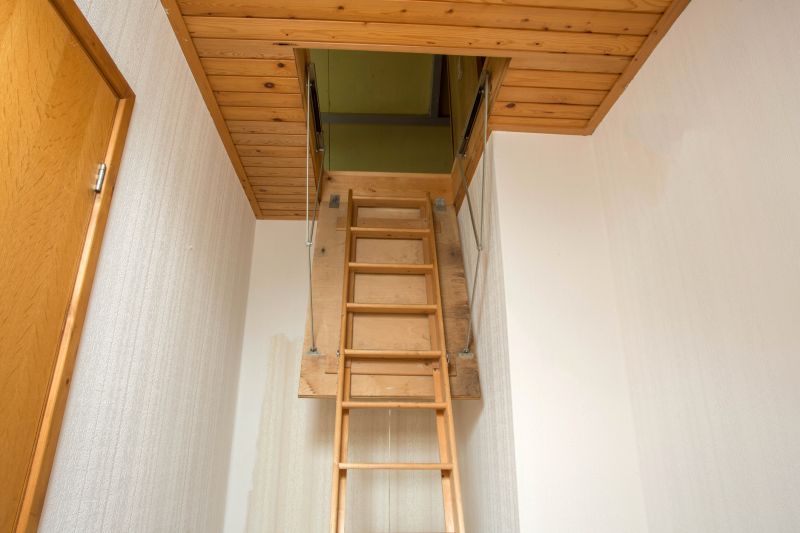 Installing an attic ladder requires careful selection of compatible products to ensure safety, durability, and ease of use. The process often involves choosing the right type of ladder, the appropriate mounting hardware, and accessories that facilitate smooth installation and reliable operation. When considering products for attic ladder installations, it is important to evaluate the structural requirements of your attic space, the weight capacity needed, and the overall accessibility goals. Many products are designed to accommodate various ceiling heights, opening sizes, and user preferences, making it essential to understand the specific features that suit your needs.
Types of Products For Attic Ladder Installations
Manual Pull-Down Attic Ladders
Traditional ladders that fold down for access and fold up for storage, suitable for standard ceiling heights.
Telescoping Attic Ladders
Space-saving ladders that extend and retract, ideal for tight spaces or where ceiling height varies.
Fixed Attic Ladders
Permanent ladders mounted directly into the ceiling opening, offering stability for frequent access.
Motorized Attic Ladders
Automated systems that open and close with remote control, providing convenience for frequent use.
Aluminum Attic Ladders
Lightweight and corrosion-resistant options suitable for various environments.
Wooden Attic Ladders
Traditional aesthetic with sturdy construction, often chosen for aesthetic compatibility.
Insulated Attic Ladders
Ladders with added insulation features to improve energy efficiency.
Reinforcement Support Kits
Hardware components that strengthen the attic opening and ensure secure installation.
Safety Rails and Handrails
Accessories that enhance safety during ascent and descent.
Mounting Brackets and Hardware
Essential components for securely attaching the ladder to the ceiling framing.
Soundproofing Accessories
Materials that reduce noise during ladder operation.
Extension Kits
Add-ons that increase the length of existing ladders to accommodate higher ceilings.
Door and Cover Assemblies
Options for concealing the attic opening when not in use.
Step Stools and Small Ladders
Alternative access solutions for lower or less frequent use.
Popular Choices
Compact and easy to store, these ladders are trending for their space-saving design.
Lightweight and adjustable, popular for versatile attic access.
Traditional and sturdy, favored for durability and aesthetic appeal.
Energy-efficient options that combine insulation with foldability for convenience.
Automated solutions gaining popularity for their ease of use.
Support kits that are frequently selected for ensuring long-term stability.
Safety accessories that are commonly added for secure ascent and descent.
Popular for adapting existing ladders to higher attic spaces.
Concealment options that are trending for aesthetic purposes.
Accessories that help reduce noise during operation are increasingly sought after.
Favored for ease of handling and corrosion resistance.
Popular for their space-saving fold-up design when not in use.
High-quality hardware options are favored for secure attachment.
Trending for added safety during ladder operation.
Many users are opting for tailored sizes to fit unique attic openings.
Attic ladder installation can vary from simple, manual pull-down models to more sophisticated, automated systems. The hardware and accessories used in the installation process can significantly impact the safety and longevity of the setup. Reinforcement kits, mounting brackets, and safety rails are common components that enhance stability and user confidence. Properly selected products can help ensure that the ladder remains secure over time, minimizing the risk of accidents or structural damage.
Choosing the right products also involves considering the ease of installation. Many kits and hardware options are designed for DIY enthusiasts, featuring clear instructions and user-friendly components. However, some installations may require professional assistance, especially when dealing with complex attic configurations or heavier-duty ladders. Investing in quality products and accessories can contribute to a safer, more reliable attic access point that meets your specific needs and space constraints.
Key Buying Considerations
- Ceiling height and attic opening size to ensure compatibility.
- Weight capacity needed for safe use based on user requirements.
- Material preferences such as aluminum, wood, or composite for durability and aesthetics.
- Ease of installation, especially if considering DIY setup.
- Type of ladder (manual, telescoping, fixed, motorized) suitable for frequency of use.
- Safety features like handrails, locking mechanisms, and non-slip steps.
- Energy efficiency features like insulation if applicable.
- Space constraints and whether a foldable or retractable model is preferred.
- Compatibility with existing attic access points or custom modifications.
- Additional accessories such as reinforcement plates or soundproofing materials.
- Budget considerations while balancing quality and durability.
- Local building codes or safety standards that may influence product choice.
- Long-term maintenance and ease of replacement parts.
- Aesthetic match with home interior or attic space.
- Availability of professional installation services if needed.
This page contains affiliate links. We may earn a commission if you make a purchase through these links, at no additional cost to you.